
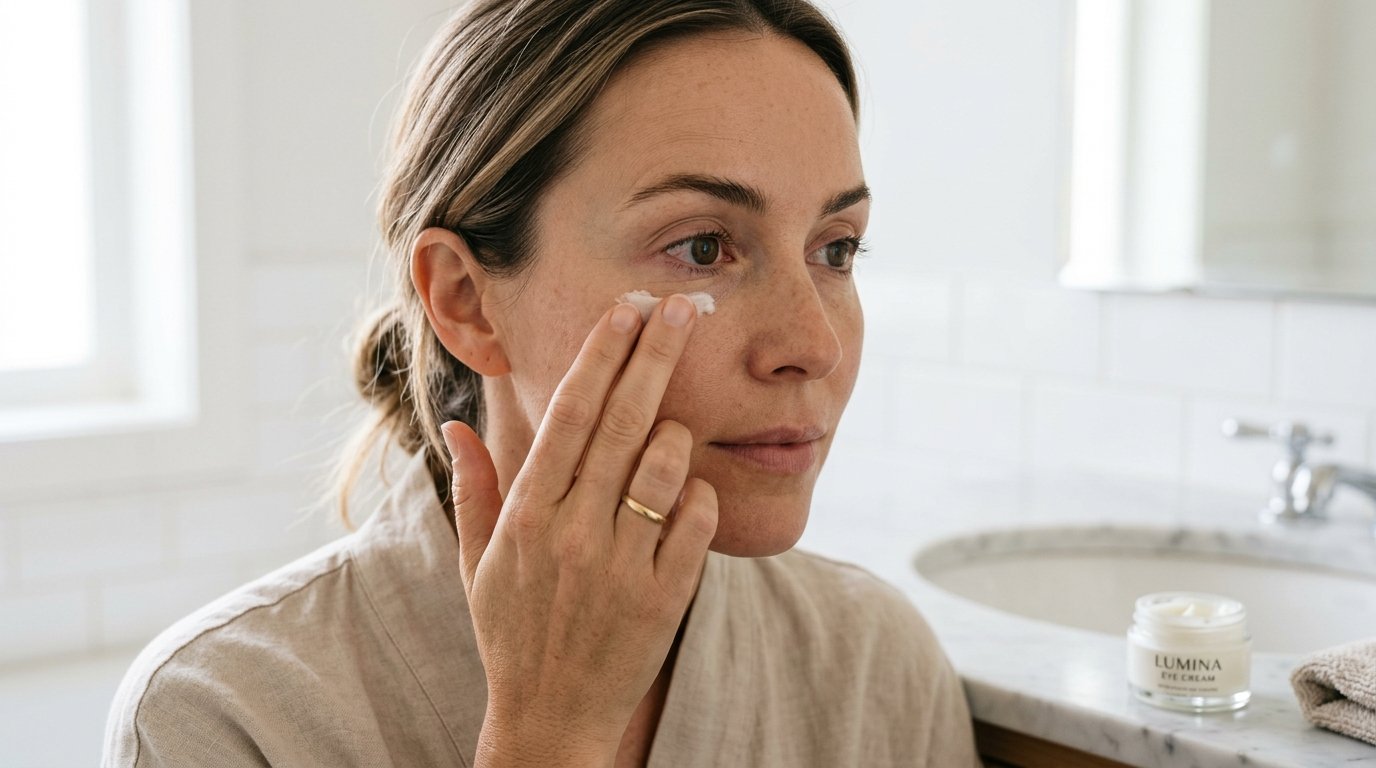
I remember the exact moment I started questioning eye cream. I was thirty-seven, standing in a department store, holding a tiny jar that cost more per ounce than anything else in my skincare cabinet. The sales associate was telling me it would brighten, de-puff, and smooth the fine lines that had started appearing at the corners of my eyes. I bought it, used it for three months, and noticed absolutely nothing different. That is when I started digging into what eye cream actually does, what it can realistically promise, and where the marketing outpaces the science.
The eye area is one of the most scrutinized zones in skincare. It is also one of the most profitable for brands, because the skin there is genuinely different from the rest of your face. It is thinner, more delicate, and shows signs of aging earlier. That anatomical reality is real. But the leap from “this skin is thinner” to “you need a separate sixty-dollar product” is where the conversation gets interesting. Let us walk through what actually matters.
Why the Eye Area Is Different
The skin around your eyes is roughly 0.5 millimeters thick, compared to about 2 millimeters on the rest of your face. It has fewer oil glands, less collagen, and is constantly in motion from blinking, squinting, and facial expressions. These factors make it more susceptible to dryness, fine lines, and visible fatigue. According to the American Academy of Dermatology, the periorbital area requires gentler formulations precisely because of this sensitivity.
That said, the thinness of the skin does not automatically mandate a separate product. What it does mean is that whatever you put near your eyes should be well-formulated, free from common irritants, and appropriate for delicate skin. Some people achieve this with their regular facial moisturizer. Others need a dedicated product. The answer depends on your skin’s sensitivity and your specific concerns.
What Eye Creams Can Actually Do
Not all eye creams are created equal, and not all claims hold up under scrutiny. The ingredients matter far more than the price tag or the elegant packaging. Here is what the evidence supports for the most common eye-area concerns.
Dark Circles
Dark circles are caused by a combination of factors: thin skin revealing underlying blood vessels, hyperpigmentation, genetics, and sometimes lifestyle factors like sleep deprivation. Topical ingredients that can help include vitamin C for brightening, niacinamide for reducing pigmentation, and caffeine for temporarily constricting blood vessels. However, if your dark circles are primarily structural, meaning they result from hollowing under the eyes or genetic pigmentation, topical products have limited ability to change their appearance. The National Institutes of Health notes that periorbital hyperpigmentation responds variably to topical treatments, and persistent cases may benefit from dermatological procedures rather than over-the-counter creams.
Puffiness
Morning puffiness often results from fluid retention, allergies, or salt intake. Caffeine is the most evidence-backed ingredient for temporary de-puffing, as it constricts blood vessels and has mild diuretic properties when applied topically. Peptides like acetyl hexapeptide-8 may also help with lymphatic drainage over time. Cooling the product before application enhances the de-puffing effect. That said, puffiness that persists throughout the day may warrant evaluation beyond topical treatment.
Fine Lines and Wrinkles
This is where retinol shines again. Retinoid-based eye treatments stimulate collagen production and improve skin texture over time. The Journal of Cosmetic Dermatology has published multiple studies confirming that retinol reduces the appearance of periorbital wrinkles with consistent use over twelve to twenty-four weeks. Peptides, particularly palmitoyl pentapeptide-4, also support collagen synthesis in a gentler format. Hyaluronic acid provides immediate plumping through hydration but does not address the structural causes of wrinkles.
The Ingredients That Earn Their Place
If you are looking at your the product label and wondering what each ingredient actually does, here is a straightforward breakdown of the ones with genuine evidence behind them.
Caffeine
Works primarily on puffiness and, to a lesser extent, dark circles caused by vascular congestion. It is fast-acting but temporary. Results last a few hours at most. It is most effective in the morning, applied chilled.
Peptides
Short chains of amino acids that signal your skin to produce more collagen. They are gentle, well-tolerated, and work gradually over weeks. Copper peptides in particular have shown promise for wound healing and skin repair in clinical settings.
Retinol
The gold standard for fine lines. Eye-specific retinol formulations are typically lower in concentration than face serums to reduce the risk of irritation. Start every other night and build up tolerance. Expect visible results in three to six months.
Hyaluronic Acid
Provides hydration and temporary plumping. It smooths the appearance of fine lines caused by dehydration but does not treat deeper structural wrinkles. Best used under a moisturizer to seal in hydration.
Vitamin K
Some evidence suggests it can reduce dark circles by improving microcirculation, though the research is less robust than for the ingredients listed above. It is most commonly found in specialized eye formulations.
When Your Regular Moisturizer Is Enough
Here is the part that the beauty industry does not advertise: if you do not have specific eye-area concerns, your regular facial moisturizer may serve you perfectly well. Many modern moisturizers already contain hyaluronic acid, ceramides, niacinamide, and antioxidants, all of which benefit the eye area. The question is not whether a targeted treatment works, but whether you need a separate product to deliver ingredients your moisturizer already provides.
The key consideration is formulation. Eye-area skin is more prone to irritation from fragrances, essential oils, and harsh preservatives. If your facial moisturizer contains none of these and does not cause stinging or watering around your eyes, it may be all you need. If it does cause discomfort, switching to a dedicated eye product that has been ophthalmologically tested is a reasonable choice.
How to Apply this step Correctly
Even the best the right formula underperforms if applied incorrectly. The technique matters. Use your ring finger, which applies the least pressure of any finger. Dot a rice-grain-sized amount along the orbital bone, starting from the inner corner and working outward. Gently tap, never pull or drag, the skin. This tapping motion also stimulates microcirculation, which can help with both puffiness and dark circles over time.
Avoid applying product too close to the lash line. The product migrates naturally as you blink and move your face. Applying it directly on the eyelid or too near the eye can cause milia, small white bumps caused by trapped keratin, or general irritation. Less is more with eye products. A tiny amount covers the entire orbital area effectively.
The Marketing Gap
Some your treatments cost upward of two hundred dollars and promise results that no topical product can reliably deliver. The marketing around these products often relies on before-and-after photos with optimized lighting, short time frames, or ambiguous language like “visibly brighter” and “looks firmer.” These are subjective measures, not clinical outcomes.
The truth is that this product is a product category built on a real anatomical need, but inflated by aspirational marketing. The delicate skin around your eyes does deserve attention and appropriate care. But attention does not have to mean a separate product with a luxury price tag. It means understanding what your specific concerns are, choosing ingredients with evidence behind them, and applying them correctly.
Board-certified dermatologist Dr. Ranella Hirsch has noted that many of the ingredients in premium this products are available in more affordable facial products. The formulation, not the branding, is what determines efficacy. This is an important distinction for women over 35 who want to invest wisely in their skincare rather than fall for every new product launch.
Building a Realistic Eye-Area Routine
For most women over 35, a practical approach to the eye area looks like this. In the morning, apply sunscreen carefully around the orbital area, avoiding direct contact with the eyes. If you use a vitamin C serum on your face, a small amount near the eye area provides antioxidant protection. At night, if fine lines are a concern, an this product with retinol or peptides applied consistently over several months will produce visible improvement. If puffiness is your primary issue, a chilled caffeine-infused product in the morning addresses it temporarily while you address underlying causes like sleep quality and sodium intake.
The women who see the best results are the ones who match the product to the concern and give it enough time to work. Switching products every few weeks because you do not see immediate change is the most common reason this products fail to deliver. Skin needs patience, not variety.
Key Takeaways
- The skin around your eyes is genuinely thinner and more delicate, which is why it deserves thoughtful care, but not necessarily a separate expensive product.
- Look for evidence-backed ingredients: caffeine for puffiness, retinol for fine lines, vitamin C and niacinamide for dark circles, peptides for collagen support.
- If your regular facial moisturizer is fragrance-free and does not irritate your around the eyes, it may be sufficient for basic hydration without a dedicated this product.
- Apply this product with your ring finger using a gentle tapping motion along the orbital bone, and give any product at least three months before judging results.
- Be skeptical of premium this products that promise dramatic results. The formulation matters more than the price tag or the brand name.
For more on navigating skincare with a critical eye, explore How I Stopped Breaking Out at 38 and Your Skincare Routine as Self Care.
Written by Sarah Chen for March-8.