
Building a Gratitude Practice Mental Health Routine
Genuine gratitude practice mental health — but only when it is authentic, not forced. Gratitude has gotten a bad reputation lately. People think it means pretending everything is fine when it’s not. But genuine gratitude is not toxic positivity.
Real gratitude acknowledges difficulty while choosing to notice what’s good alongside what’s hard. It’s not about ignoring pain; it’s about not letting pain be the only thing you see. This is why a gratitude practice mental health without requiring you to suppress your feelings.
Research from Harvard Health shows regular gratitude practice reduces depression, improves sleep quality, and strengthens relationships. The key is authenticity, not forced cheerfulness. When practiced genuinely, gratitude rewires your brain to notice positive experiences more readily.
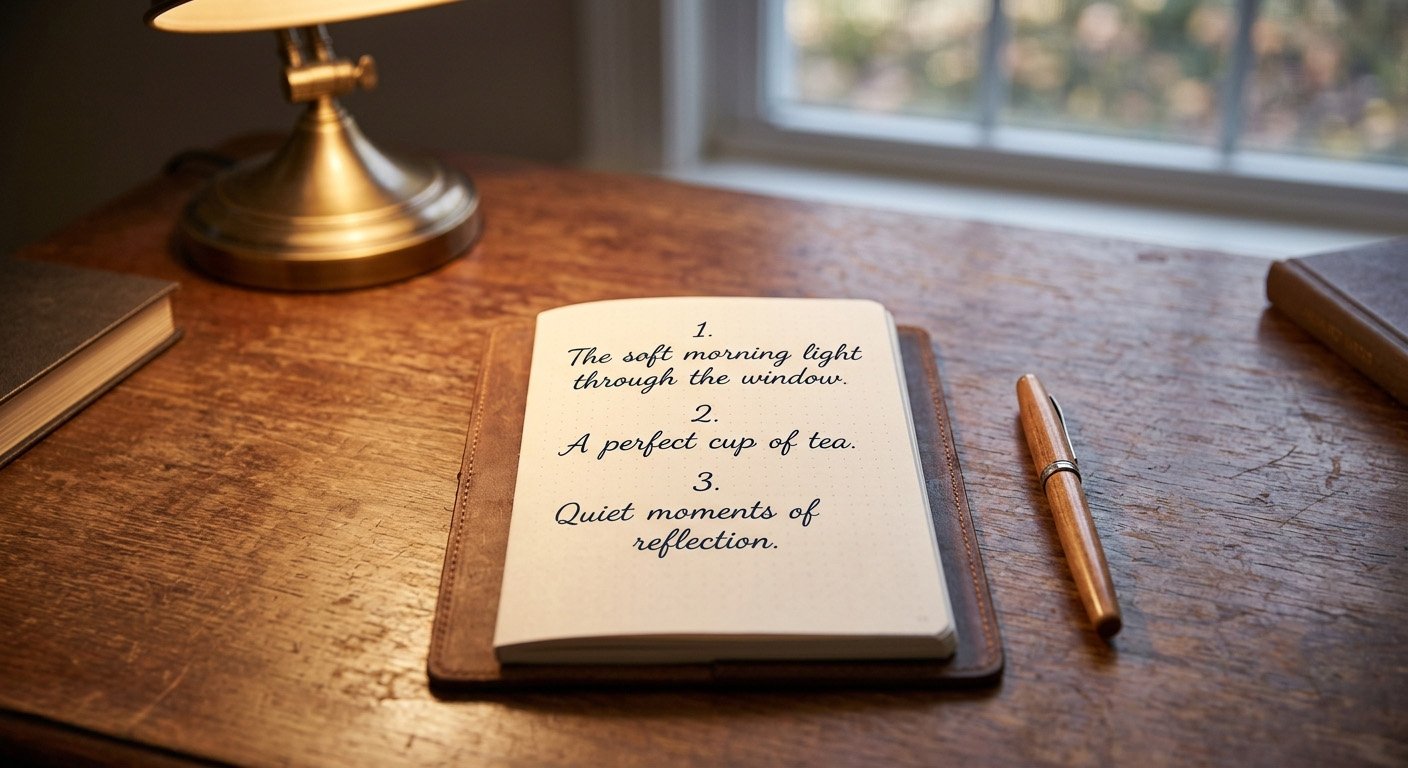
Start with one thing daily. Write down one genuine thing you’re grateful for. It can be small: a good cup of coffee, a kind text, a warm blanket on a cold evening. Over time, this shifts your baseline attention toward the positive.
Share gratitude with others. Telling someone you appreciate them benefits both of you and deepens your connections. For more on emotional well-being, see Why Your Brain Needs a Digital Detox. Harvard Health has more on the science of gratitude.
What’s good alongside what’s hard. It’s not about ignoring pain; it’s about not letting pain be the only thing you see.
Research shows regular gratitude practice reduces depression, improves sleep, and strengthens relationships. The key is authenticity, not forced cheerfulness.
Start with one thing daily. Write down one genuine thing you’re grateful for. It can be small: a good cup of coffee, a kind text, a warm blanket.
Share gratitude with others. Telling someone you appreciate them benefits both of you. It deepens connections and shifts your focus outward.
The distinction between toxic positivity and genuine gratitude comes down to permission. Toxic positivity says, “Don’t feel bad, just be grateful.” Genuine gratitude says, “I see this pain AND I also see this goodness.” Both can coexist. You can grieve a loss and still feel grateful for the love you shared. You can be exhausted by life and still notice the beauty of a sunset. Gratitude does not erase hardship; it simply makes the hardship more bearable by reminding you that joy and pain can occupy the same space.
To build a sustainable gratitude practice, try varying your approach so it never feels stale. Some days write a list of three small things. Other days write a longer letter of appreciation to someone who has impacted your life, even if you never send it. You can also practice gratitude meditations where you bring to mind people, places, and experiences that you are thankful for, sitting with the feeling of thankfulness in your body. The variety keeps a gratitude practice mental health routine fresh and prevents it from turning into a mechanical checkbox exercise that loses its meaning over time.