
Your Skincare Ingredients Cheat Sheet: What Each Ingredient Does
Your Skincare Ingredients Cheat Sheet: What Each Ingredient Does
If you have ever stood in the skincare aisle confused by ingredient lists, you need a skincare ingredients cheat sheet to make sense of it all. Hyaluronic acid, niacinamide, retinol, vitamin C — what do you actually need? Here’s the simplified version.
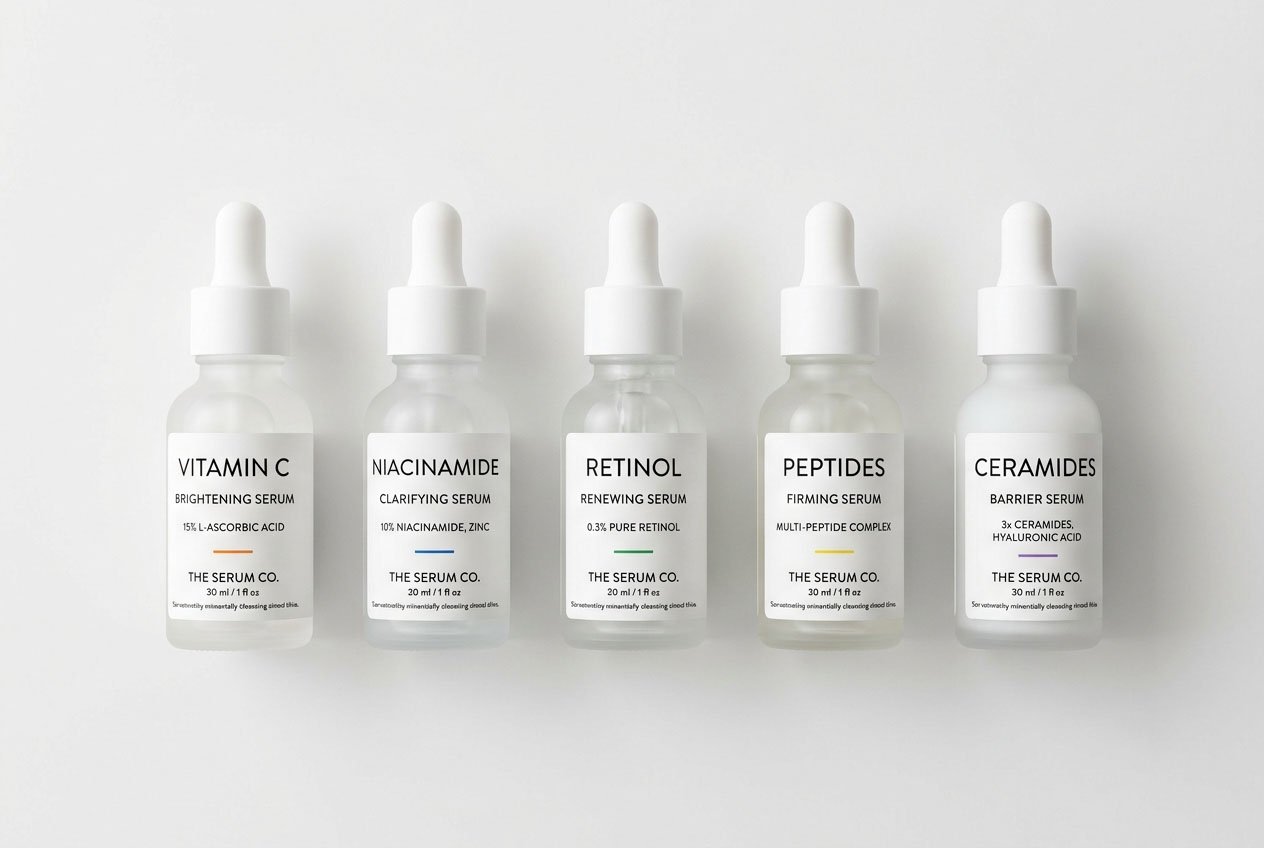
Vitamin C is your daytime antioxidant. It protects against environmental damage and brightens skin. Use it in the morning under sunscreen for best results.
Beyond the headline ingredients, there are a few lesser-known but highly effective compounds worth adding to your skincare ingredients cheat sheet. Azelaic acid, for example, is excellent for reducing redness and treating acne without the irritation of stronger prescription options. Ceramides are the building blocks of your skin barrier and become increasingly important after age 30 when natural ceramide levels begin to decline. Peptides are short chains of amino acids that signal your skin to produce more collagen, making them a gentle but effective anti-aging ingredient that works well alongside retinol in a nighttime routine.
Hyaluronic acid is pure hydration. It holds a thousand times its weight in water and plumps skin, making fine lines less visible. Almost everyone benefits from it, regardless of skin type.
Niacinamide is the multi-tasker. It reduces pore size, controls oil production, calms inflammation, and strengthens the skin barrier. It plays well with almost everything in your routine.
One of the most common questions when using a skincare ingredients cheat sheet is which ingredients can and cannot be used together. Vitamin C works best in the morning, followed by sunscreen. Niacinamide pairs well with almost everything, including retinol and vitamin C despite outdated myths that they cancel each other out. Retinol should not be layered with other strong active acids like AHAs or BHAs in the same routine. Hyaluronic acid is the exception to every rule: it plays well with everything and can be layered morning and night regardless of what else you are using. Knowing these combinations helps you build a routine that maximizes results without irritating your skin.
Retinol is the gold standard for anti-aging. It speeds cell turnover and boosts collagen production. Start slowly, use it only at night, and always wear sunscreen the next day.
For more on building a complete routine, check out Double Cleansing: Hype or Legit?. The American Academy of Dermatology also offers excellent guidance on building a skincare routine based on your skin type.
Hyaluronic acid is pure hydration. It holds a thousand times its weight in water and plumps skin, making fine lines less visible. Almost everyone benefits from it, regardless of skin type.
Niacinamide is the multi-tasker. It reduces pore size, controls oil production, calms inflammation, and strengthens the skin barrier. It plays well with almost everything in your routine.
Retinol is the gold standard for anti-aging. It speeds cell turnover and boosts collagen production. Start slowly, use it only at night, and always wear sunscreen the next day.
For more on building a complete routine, see our post on Double Cleansing: Hype or Legit?. The American Academy of Dermatology also offers excellent guidance on building a skincare routine based on your skin type.
Hyaluronic acid is hydration. It holds a thousand times its weight in water and plumps skin. Almost everyone benefits from it, regardless of skin type.
Niacinamide is the multi-tasker. It reduces pore size, controls oil, calms inflammation, and strengthens the skin barrier. It plays well with almost everything.
Retinol is the gold standard for anti-aging. It speeds cell turnover and boosts collagen. Start slowly, use it only at night, and always wear sunscreen the next day.