
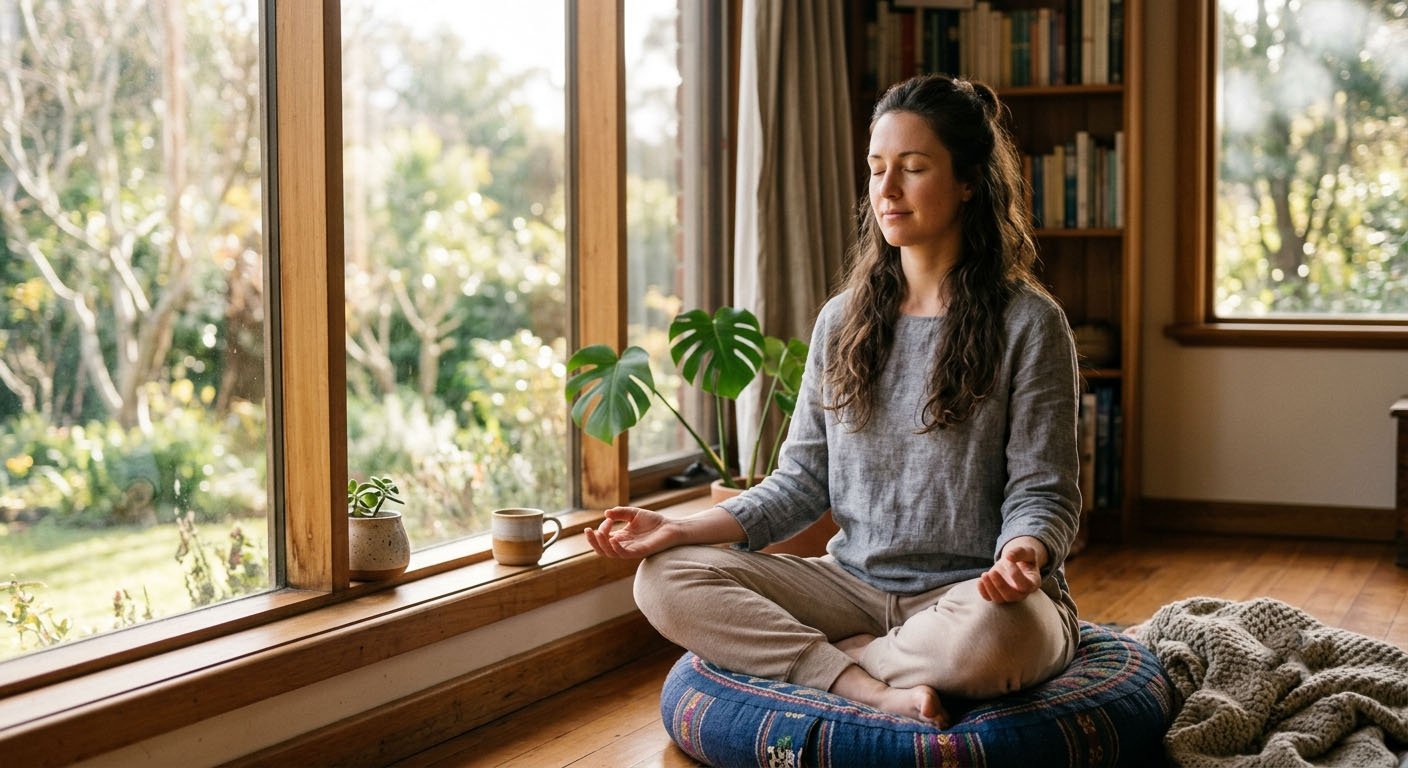
Every meditation app told me to clear my mind. But my mind has never been clear a day in its life. I thought I was bad at meditation. This is where our meditation for beginners who can’t guide can help you make sense of it all. This meditation for beginners who can’t approach is designed for real people with busy lives.
The truth is, meditation isn’t about having no thoughts. It’s about noticing your thoughts without getting carried away by them. That’s a completely different goal.
I stopped trying to empty my mind and started simply counting my breaths. One to ten. When I lost count, I started over. That was my meditation.
Some days I made it to four before getting distracted. That’s fine. The practice is in the returning, not in the perfect focus.
Three minutes a day changed my relationship with my own mind. Not because I got good at it, but because I stopped judging myself for being bad at it.
Finding a meditation for beginners who can’t sit still or quiet their mind is all about adjusting expectations. The goal isn’t to empty your mind but to notice when it wanders. Short, guided sessions can make the practice accessible and sustainable for even the busiest schedules.
Another common obstacle for those seeking meditation for beginners who can’t stay focused is physical discomfort. Your back aches, your leg falls asleep, or you feel an unbearable urge to move. Instead of fighting these sensations, try incorporating them into your practice. Notice the discomfort without judging it. Shift your position mindfully if you need to. The idea that meditation requires absolute stillness is a myth. Moving with awareness is itself a meditation practice, and over time your body will gradually settle as it learns that this is a safe space to rest.
Walking meditation is another excellent entry point for those who find sitting meditation challenging. As you walk slowly, bring your attention to the physical sensations of each step — the lifting of your foot, the movement through the air, the placement back on the ground. You can coordinate your breath with your steps. This form of meditation for beginners who can’t sit still turns movement itself into the anchor, making it far more accessible for restless or active personalities.
Remember: Meditation For Beginners Who Can’T is only valuable when you actually use it. Start small, stay consistent, and watch your confidence grow. For more information, visit NCCIH meditation guide.
Meditation for Beginners Who Can’t
Finding a meditation for beginners who can’t sit still is easier than you think. The key is to abandon the idea that meditation requires a completely empty mind. Instead, try guided meditations that give your mind something to focus on, such as a body scan or a breathing exercise. Even two minutes of mindful breathing can make a difference in your stress levels.
Another approach for beginners who struggle with traditional meditation is to incorporate mindfulness into everyday activities. Washing dishes, walking the dog, or drinking your morning coffee can all become meditation practices when you bring your full attention to the experience. The goal is not to stop thinking but to become aware of your thoughts.