
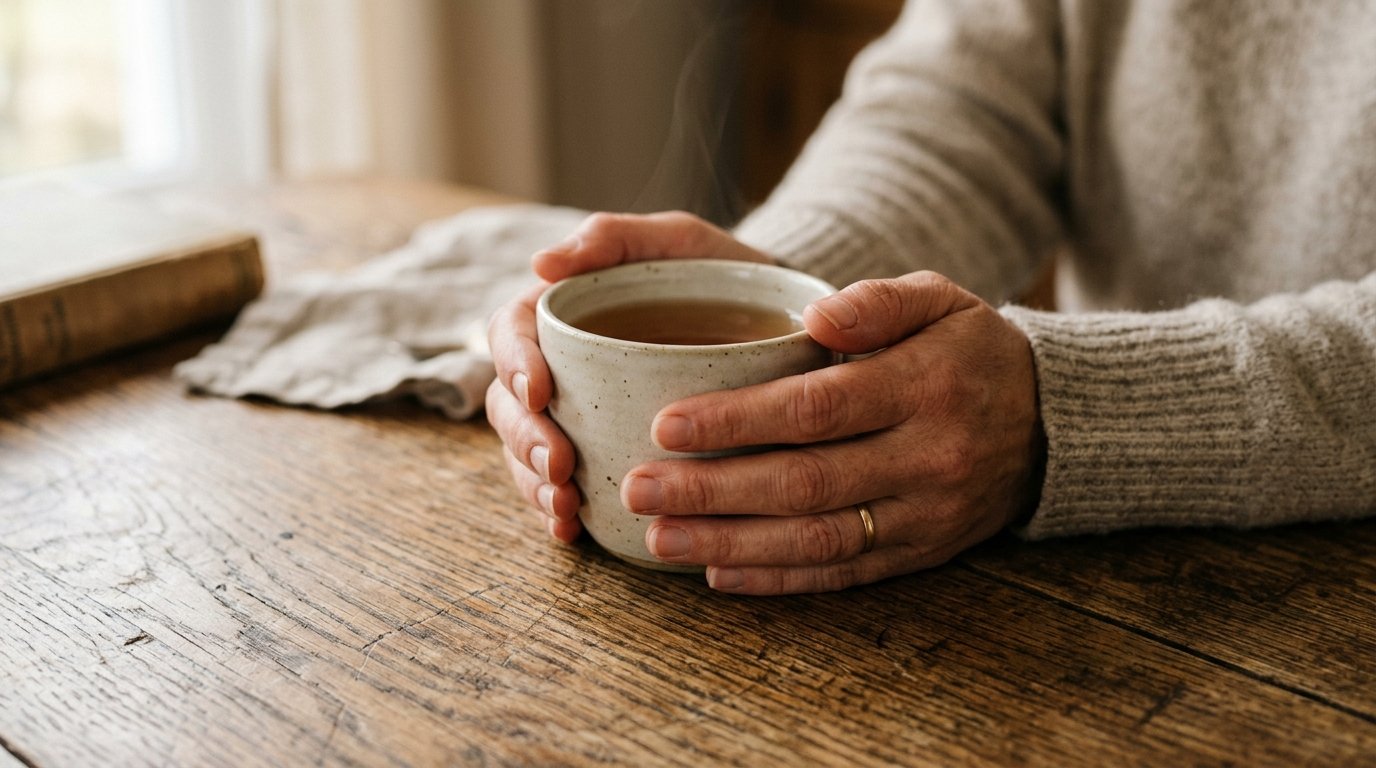
Last January, I did what millions of women do every new year. I bought a planner, downloaded a meditation app, signed up for a yoga class, and declared that 2026 would be the year I finally “got my routine together.” By February, the planner was buried under a pile of mail, the meditation app was sending me guilt-tripping notifications, and the yoga class had been quietly dropped from my calendar. I wasn’t lazy. I wasn’t unmotivated. I was doing what most of us do: building a self-care routine on a foundation that was never going to hold.
Here’s what nobody tells you about self-care routines, especially for women navigating the demands of life after 35. The problem isn’t willpower or discipline. The problem is that most of the advice we receive is designed for someone with unlimited time, boundless energy, and zero responsibilities. That’s not us. And until we stop measuring our self-care against an impossible standard, we’ll keep cycling through the same pattern of ambitious starts and quiet abandonments.
Why Your Previous Routines Didn’t Last
Let’s start with the uncomfortable truth. Most self-care habitss fail not because women lack discipline, but because the routines themselves are poorly designed for real life. They’re built on what researchers call “extrinsic motivation” — the spark of excitement you feel when you first imagine your improved life. That spark fades fast. What remains is a habit that requires effort, and effort without a system is just another item on an already overwhelming to-do list.
A 2023 study published in the American Psychological Association’s Monitor on Psychology found that willpower functions more like a muscle than a fixed trait. It fatigues with use. This means that women who spend their entire day making decisions — what to cook, how to handle a difficult coworker, whether to answer that email or help with homework — arrive at evening self-care depleted. They haven’t failed. Their decision-making capacity has been spent.
The second reason routines collapse is something behavioral scientists call the “what-the-hell effect.” You miss one day of meditation and feel like a failure, so you skip the next day too, and within a week the habit is gone. This all-or-nothing mindset is particularly common among women, who are socialized to equate consistency with moral character. Missing a workout doesn’t make you a bad person. It makes you human.
The Small-Habit Revolution
The most evidence-backed approach to building lasting habits is deceptively simple: start so small it feels almost pointless. BJ Fogg, a behavior scientist at Stanford University and author of Tiny Habits, has demonstrated that the key to lasting change isn’t motivation — it’s making the behavior so easy that you can do it even on your worst day. His research, available through the Stanford Behavior Design Lab, shows that starting with what he calls a “starter step” — a two-minute version of the habit you want to build — dramatically increases long-term adherence.
This looks nothing like the self-care industry’s version of routine-building. Instead of an hour-long morning ritual, you’re drinking one glass of water before your coffee. Instead of a 30-minute meditation, you’re taking three deep breaths while your computer boots up. Instead of a full skincare routine, you’re washing your face with a clean cloth. These micro-actions feel too simple to matter, but that’s precisely the point. They bypass the resistance that derailed your previous attempts.
Research from University College London, published in the European Journal of Social Psychology, found that it takes an average of 66 days for a new behavior to become automatic — not the 21 days commonly cited. And the habits that stuck fastest were the ones with the lowest initial effort requirement. The message is clear: the smaller you start, the longer you last.
Habit Stacking: The Strategy That Actually Works
Habit stacking is one of the most effective strategies for building a sustainable your wellness routine because it works without relying on willpower alone. The concept is straightforward: attach a new self-care habit to something you already do automatically. For example, practice a two-minute gratitude journal entry right after brushing your teeth at night. Or do a body scan relaxation exercise while waiting for your morning coffee to brew. The existing habit becomes the trigger for the new one, eliminating the need to remember.
This approach is especially powerful for women juggling multiple roles. You don’t need to carve out new time in your day. You’re simply layering small self-care practices onto routines that are already running on autopilot. The cognitive load is minimal, and consistency becomes almost effortless. Over weeks and months, these stacked habits compound into meaningful change.
Redefining Self-Care for Low-Energy Days
Here’s something the glossy self-care accounts on social media won’t tell you: the routine that works when you feel rested and energized is not the routine that works when you’re exhausted, stressed, or emotionally drained. Having a scaled-back version of your routine for low-energy days isn’t a sign of weakness. It’s a sign of wisdom.
On hard days, self-care might mean simply washing your face and going to bed on time. It might mean drinking a full glass of water before reaching for caffeine. It might mean sitting quietly for five minutes instead of forcing yourself through a workout. The goal is not perfection. The goal is showing up for yourself in whatever way you can manage today.
This concept connects directly to what researchers call “self-compassion.” Dr. Kristin Neff, a leading researcher at the University of Texas at Austin, has shown through extensive studies that self-compassion — treating yourself with the same kindness you’d offer a friend — is a stronger predictor of long-term behavior change than self-criticism. You can read more about this approach at the Center for Self-Compassion. When your routine includes grace for difficult days, you’re far more likely to return to it after a lapse.
For women in their late 30s and beyond, this flexibility matters even more. Hormonal fluctuations, caregiving responsibilities, career pressures, and the cumulative weight of years of putting others first all mean that energy is not a constant. Building a daily practices that accounts for this reality — rather than punishing you for it — is the difference between a practice that lasts and one that becomes another source of guilt.
Working With Your Nervous System, Not Against It
One of the most overlooked aspects of rituals that actually stick design is understanding your own nervous system. Many women are unknowingly operating in a state of chronic stress activation — their sympathetic nervous system is in overdrive, and their body is stuck in fight-or-flight mode. When your nervous system is dysregulated, adding more to your plate (even “good” things like exercise or meditation) can actually increase stress rather than reduce it.
Before layering new habits onto your life, it’s worth examining whether your nervous system needs regulation first. Simple practices like cold water on the wrists, slow exhalations (making your exhale longer than your inhale), or even humming can activate the parasympathetic nervous system and help shift you out of stress mode. You can learn more about this in our guide to nervous system regulation for women.
When your nervous system is calmer, self-care habits become easier to maintain — not because you’re trying harder, but because your body is no longer fighting against you. This is the missing piece that most routine-building advice ignores entirely.
Environmental Design: Make Self-Care the Default
Willpower is unreliable. Environment is not. One of the most practical things you can do to make your healthy routines stick is to redesign your physical space so that the desired behavior becomes the path of least resistance. Put your journal on your pillow so you see it when you go to bed. Leave your water bottle on your nightstand. Set out your workout clothes the night before. Put the meditation app on your phone’s home screen.
James Clear, author of Atomic Habits, emphasizes that “environment is the invisible hand that shapes human behavior.” You don’t need more discipline. You need fewer obstacles. This principle is especially useful for women who feel like they’re constantly fighting against their own habits. Stop fighting. Start designing.
The Monthly Review: Your Secret Weapon
Perhaps the most underrated strategy for making your these practices last is building in regular review. Once a month, sit down for ten minutes and ask yourself three questions: What’s working? What feels like a chore? What do I need to add, remove, or adjust?
This practice prevents the slow accumulation of habits that no longer serve you. It also creates space to celebrate what’s working — something women are notoriously bad at doing. Your routine should evolve with your life. What works during a calm month may not work during a stressful one. What felt essential six months ago may now feel unnecessary. Flexibility isn’t failure. It’s sustainability.
This kind of periodic reassessment also helps you stay connected to the why behind your routine. When self-care becomes another obligation rather than a source of nourishment, something has shifted. The monthly review catches that shift early and lets you course-correct before resentment builds.
Connection, Not Just Coping
Self-care isn’t only about managing stress or preventing burnout. It’s also about creating space for joy, connection, and the things that make life feel meaningful. For women over 35, who often spend the majority of their energy on responsibilities, this dimension of self-care can feel foreign or even selfish. It’s not.
Social connection is one of the most powerful predictors of health and longevity. A landmark study from Harvard University, known as the Harvard Study of Adult Development, has tracked participants for over 80 years and consistently found that the quality of our relationships is the single strongest predictor of both physical health and happiness. Making time for a weekly phone call with a friend, a monthly dinner with someone who makes you laugh, or even a five-minute text conversation with someone who understands you — these are not luxuries. They are essential self-care.
Understanding your own healthspan — the years of your life spent in good health, not just alive — can help you prioritize what truly matters. Our article on women’s healthspan explores why quality of life deserves the same attention we give to longevity.
The Bottom Line
A these practices that actually sticks isn’t built on motivation, perfection, or an elaborate morning ritual you found on social media. It’s built on tiny actions, self-compassion, environmental design, and the willingness to adjust as your life changes. You don’t need to overhaul your entire life this week. You need to choose one small thing, attach it to something you already do, and show up for it consistently — even on the hard days, especially on the hard days.
Key Takeaway
The most sustainable these practices is the one designed for your actual life, not your idealized one. Start with the smallest possible action, stack it onto an existing habit, build in flexibility for low-energy days, and review monthly. Self-care isn’t about adding more to your plate. It’s about treating yourself with the same care and consistency you so readily give to everyone else.
Written by Nina Patel for March-8.