

Why Your Sleep Changed After 35 (and What Actually Helps)
Hormones, stress and your circadian rhythm all shift after 35. Here’s the science behind it and what genuinely improves your sleep.

Hormones, stress and your circadian rhythm all shift after 35. Here’s the science behind it and what genuinely improves your sleep.

Self-care routines fail by design, not by willpower. Here’s how to build one that actually survives your real, busy life after 35.
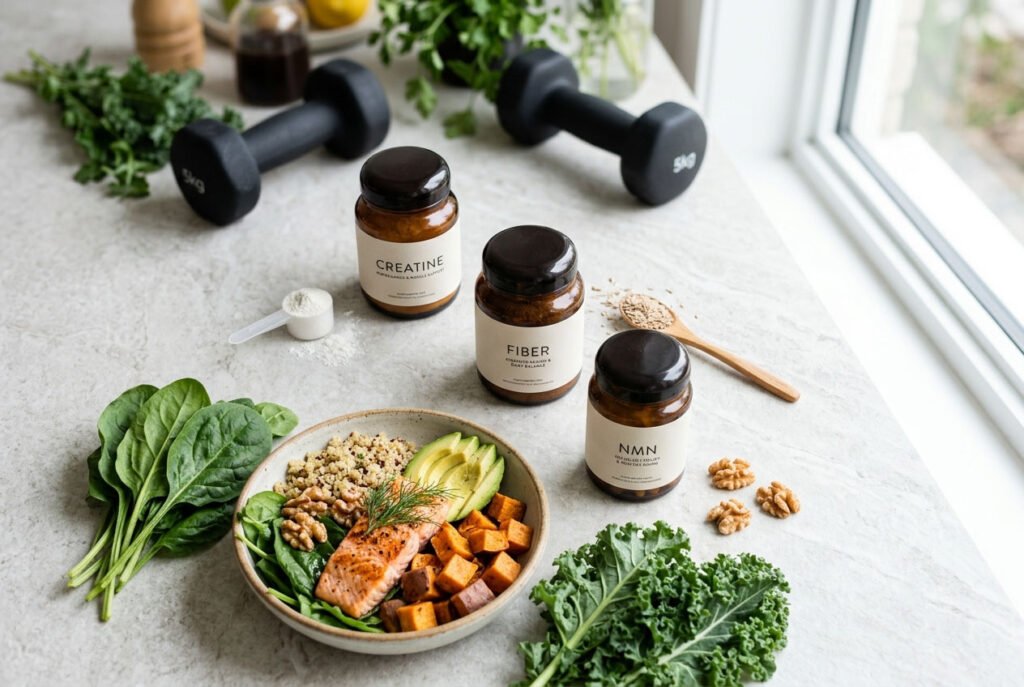
For decades, creatine for women was an afterthought in sports nutrition. Dietary fiber, meanwhile, belonged to cereal boxes. NMN, similarly, belonged to longevity researchers. In 2026, all three have crossed into mainstream women’s health — and for good reason. A growing body of research suggests these supplements address the exact areas where aging begins. For

Precision nutrition for women is the new standard in 2026. The reason is simple: the “one perfect diet” does not exist. If you’ve tried it and watched it fail — despite following every rule — you’re not doing it wrong. Nutrition science has finally moved past one-size-fits-all advice. The shift has been particularly meaningful for

Indeed, in 2026, the microbiome revolution has expanded far beyond the gut. Women’s health, meanwhile, is at the center of it. For the past decade, “microbiome” was almost synonymous with “gut,” though the reality is bigger. Still, yogurt ads, probiotic drinks, and wellness podcasts all pointed to the same conclusion. The message: healthy gut bacteria,
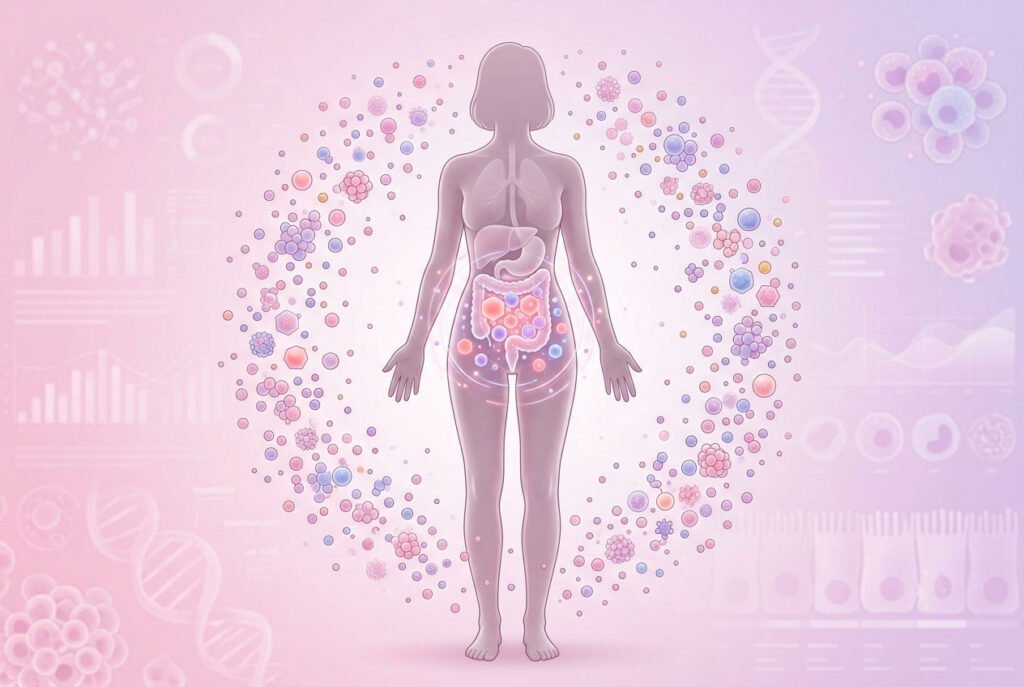
You’ve probably heard about the gut microbiome — the trillions of bacteria living in your digestive tract. But in 2026, the vaginal microbiome is the ecosystem researchers are most excited about. And for women’s health, it may matter more than you realize. Your vaginal microbiome is a community of microorganisms that lives in your vaginal

Walk into any wellness aisle in 2026 and you’ll see stress support supplements everywhere: magnesium powders, saffron capsules, and adaptogen blends promising to take the edge off. It’s easy to be skeptical — but the surge of interest reflects a growing body of research, especially for women navigating the hormonal changes of their late thirties

Nervous system regulation is the missing piece in women’s stress management. It explains why “just relax” never worked for you. Chronic stress, anxiety, and exhaustion are not personal failings of willpower. They are signs of nervous system dysregulation. In 2026, nervous system regulation has become a non-negotiable pillar of women’s health. In a high-speed, always-on

Health wearables for women have come a long way from the step counter. In 2026, a “health wearable” means a smart ring on your finger that tracks your sleep stages, heart rate variability, skin temperature, and menstrual cycle — and a continuous glucose monitor on your arm that shows exactly how your body responds to

AI women’s health technology has made a leap forward in 2026. The apps and devices that once simply logged your cycle and symptoms have evolved into something far more powerful. Today they offer AI-driven, biomarker-based precision health management. For women over 35, this shift is quietly changing how healthcare decisions take shape. Precision medicine for