
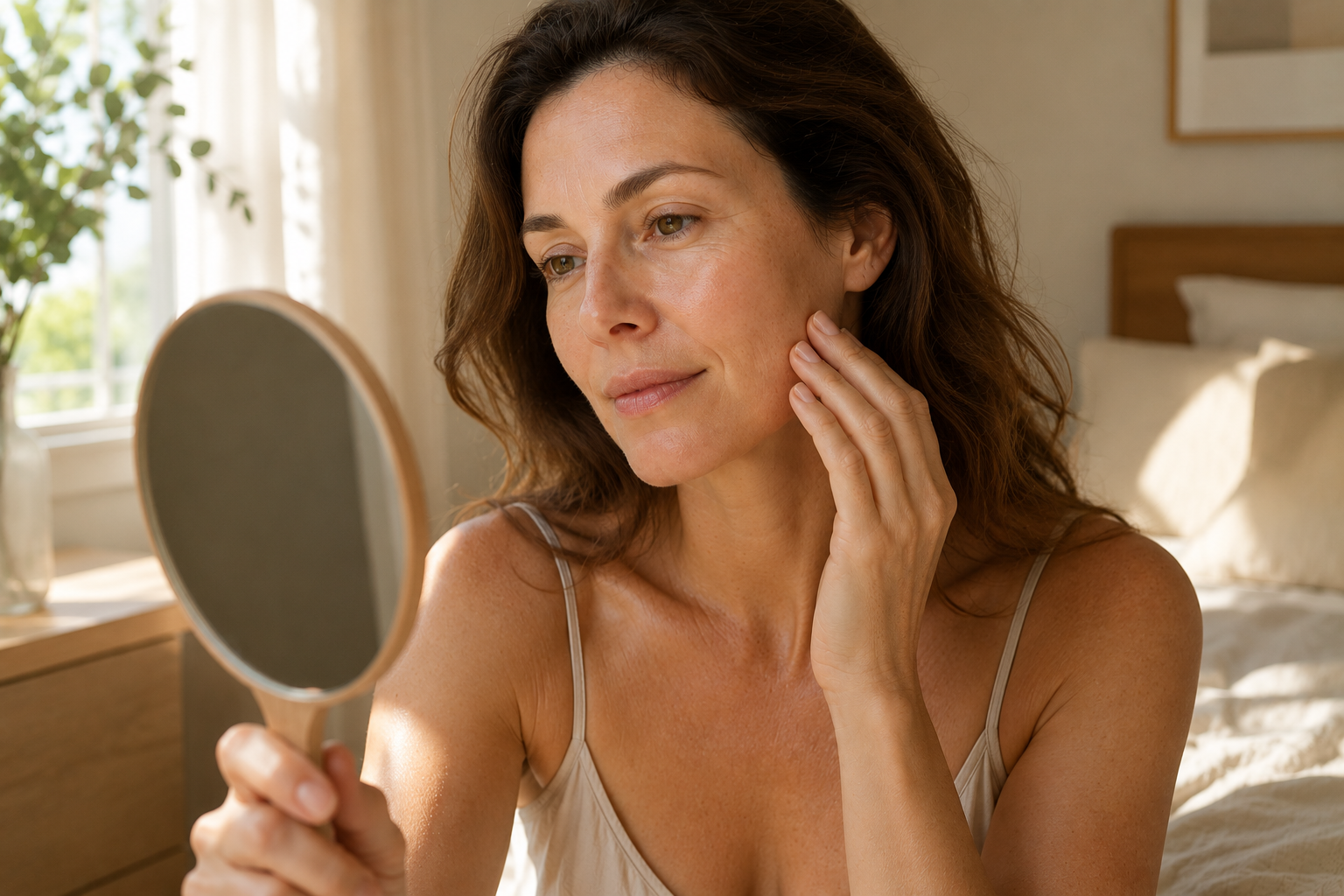
You wake up one day and your skin looks different. It’s drier, duller, and lines that used to disappear now stay. This is not your imagination. Your skin has changed. This is where our skin changes after 35 women guide can help you make sense of it all.
Collagen production drops about 1% per year after age 30. By 35, the cumulative effect becomes visible. Your skin produces less oil, retains less moisture, and repairs itself more slowly.
Adjust your routine accordingly. Switch to a gentle, cream-based cleanser. Your skin no longer needs the stripping foam cleansers that worked in your 20s.
Add a hydrating serum with hyaluronic acid. It plumps and moisturizes without the heaviness of a rich cream. Layer it under your moisturizer.
Retinol becomes more important after 35. It boosts collagen production and speeds cell turnover. Start low, go slow, and be patient.
Beyond adjusting your skincare products, lifestyle factors play an important role in how your skin ages after 35. Sleep quality directly affects cortisol levels, which in turn impact collagen breakdown and skin repair. Women who get seven to eight hours of quality sleep show measurably better skin barrier function and fewer fine lines than those who are sleep-deprived. Similarly, a diet rich in omega-3 fatty acids, antioxidants, and adequate protein provides the building blocks your skin needs to maintain its structure and bounce back from daily environmental stress.
The most common skin changes after 35 women notice include loss of elasticity, dryness, and the appearance of fine lines. These changes are driven by declining estrogen and collagen production. The good news is that the right skincare approach can significantly slow and even reverse these effects.
Hormonal changes during perimenopause also deserve attention when discussing skin changes after 35 women experience. Declining estrogen levels affect oil production, collagen synthesis, and the skin barrier function all at once. This is why many women in their late 30s and 40s suddenly find their previously oily skin becoming dry and sensitive. Adapting your routine seasonally and paying attention to how your skin responds to different phases of your menstrual cycle can help you stay ahead of these shifts rather than constantly reacting to them.
Remember: Skin Changes After 35 Women is only valuable when you actually use it. Start small, stay consistent, and watch your confidence grow. For more information, visit American Academy of Dermatology.
Skin Changes After 35 Women
Understanding the skin changes after 35 women notice can help you choose the right products and treatments. The decline in collagen production that begins in the mid-30s leads to thinner, less elastic skin that shows lines more easily. Estrogen drops also reduce oil production, which can leave skin feeling drier and looking duller. Knowing what is happening beneath the surface empowers you to make better skincare choices.
Ingredients that support the skin barrier and boost collagen are particularly helpful after 35. Look for products containing retinoids, vitamin C, ceramides, and peptides in your routine. A simple but targeted approach often delivers better results than a complicated multi-step regimen.