
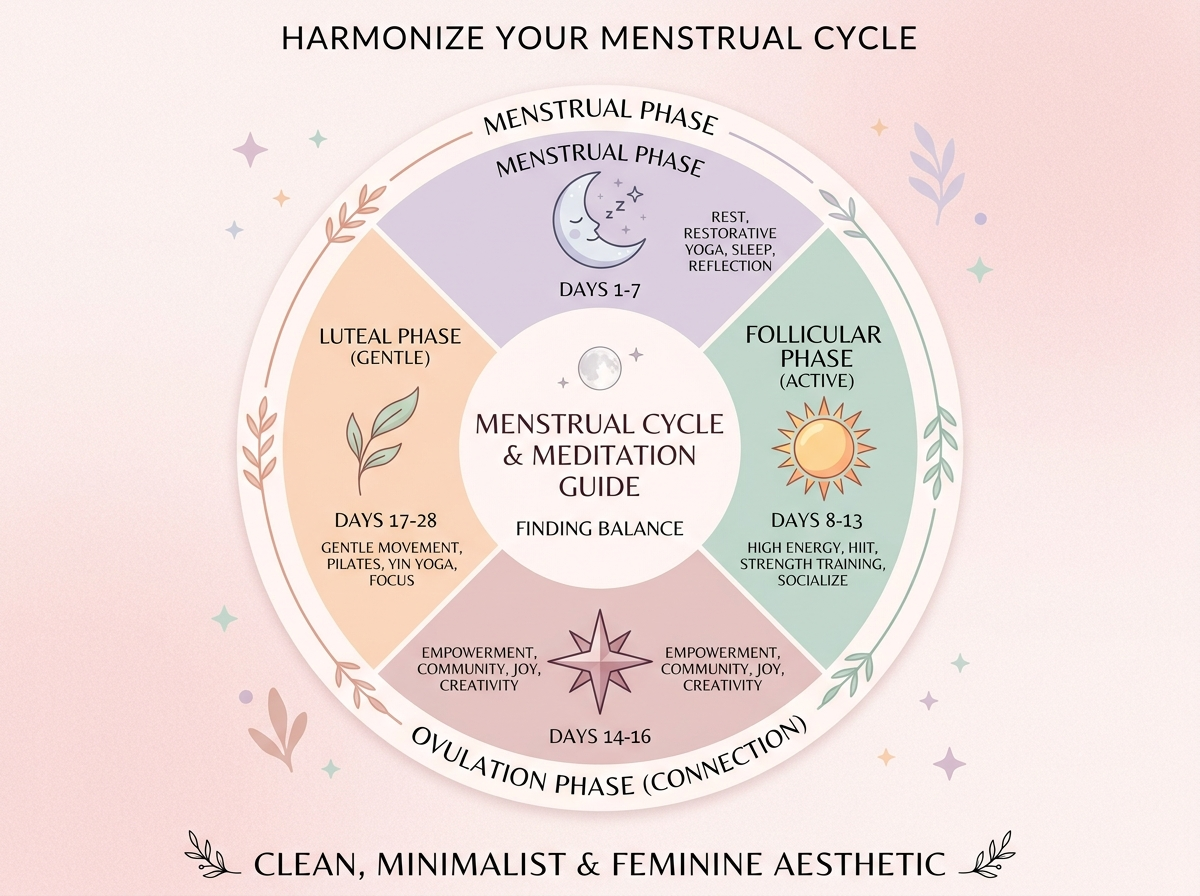
A cycle-aware meditation practice recognizes that your body changes throughout the month, unlike most meditation advice that treats women as if their bodies work the same way every day. They do not. Women hormonal cycles profoundly affect energy levels, emotional states, and cognitive function throughout the month. A meditation practice that works beautifully during the follicular phase may feel impossible during the luteal phase. A cycle-aware meditation practice recognizes this and offers a more intelligent approach: instead of fighting your hormonal biology, work with it.
The Four Phases in Your Cycle-Aware Meditation Practice
Your menstrual cycle has four distinct phases, each with different hormonal profiles and energy patterns. During the follicular phase after your period ends and before ovulation estrogen rises, energy increases, and you feel more outgoing and creative. This is an excellent time for active meditation practices like walking meditation, visualization, or loving-kindness meditation. During ovulation, when estrogen peaks, your communication skills and social connection are at their highest. Group meditation or partner practices feel natural.
The luteal phase after ovulation presents different needs. Progesterone rises, energy dips, and many women experience increased anxiety or irritability. This is when your meditation practice should shift toward grounding, soothing techniques. Gentle breathwork, yin-inspired body scans, and restorative practices are far more effective than trying to force focus during this phase. During menstruation, when both estrogen and progesterone drop, your energy is at its lowest. This is a time for complete rest in your practice. Simple breath awareness, lying-down meditation, and self-compassion practices support your body through this phase rather than demanding performance from it.
Science Behind a hormone-synced meditation
Research on women meditation practitioners has revealed that forcing the same practice across all cycle phases leads to higher dropout rates and lower satisfaction. When women adopt a cycle-based meditation approach, adherence improves and reported benefits increase. The reason is physiological. Your nervous system sensitivity changes throughout your cycle. Your baseline cortisol levels fluctuate. Your brain default mode network responds differently depending on where you are in your cycle. A meditation practice that ignores these variables is working against your biology rather than with it.
How to Build a meditation that adapts to your cycle
Start by tracking your cycle using any period tracking app. Note your energy level, mood, and meditation quality each day. After one or two cycles, you will see clear patterns emerge. Use those patterns to plan your meditation approach for each phase. Schedule more active, social practices during your follicular and ovulatory phases. Plan gentler, more introspective practices during your luteal and menstrual phases. The goal is not to force yourself to meditate the same way every day. The goal is to meet yourself where you actually are.
Why period-aware practice Matters After 35
Women over 35 are often navigating perimenopause, when cycles become irregular and hormonal fluctuations become more unpredictable. This makes cycle awareness even more important, because your body baseline is shifting. What worked six months ago may no longer feel right. A flexible, responsive meditation practice that adapts to your changing biology is not a luxury. It is a necessity for maintaining mental wellness through this transition.