
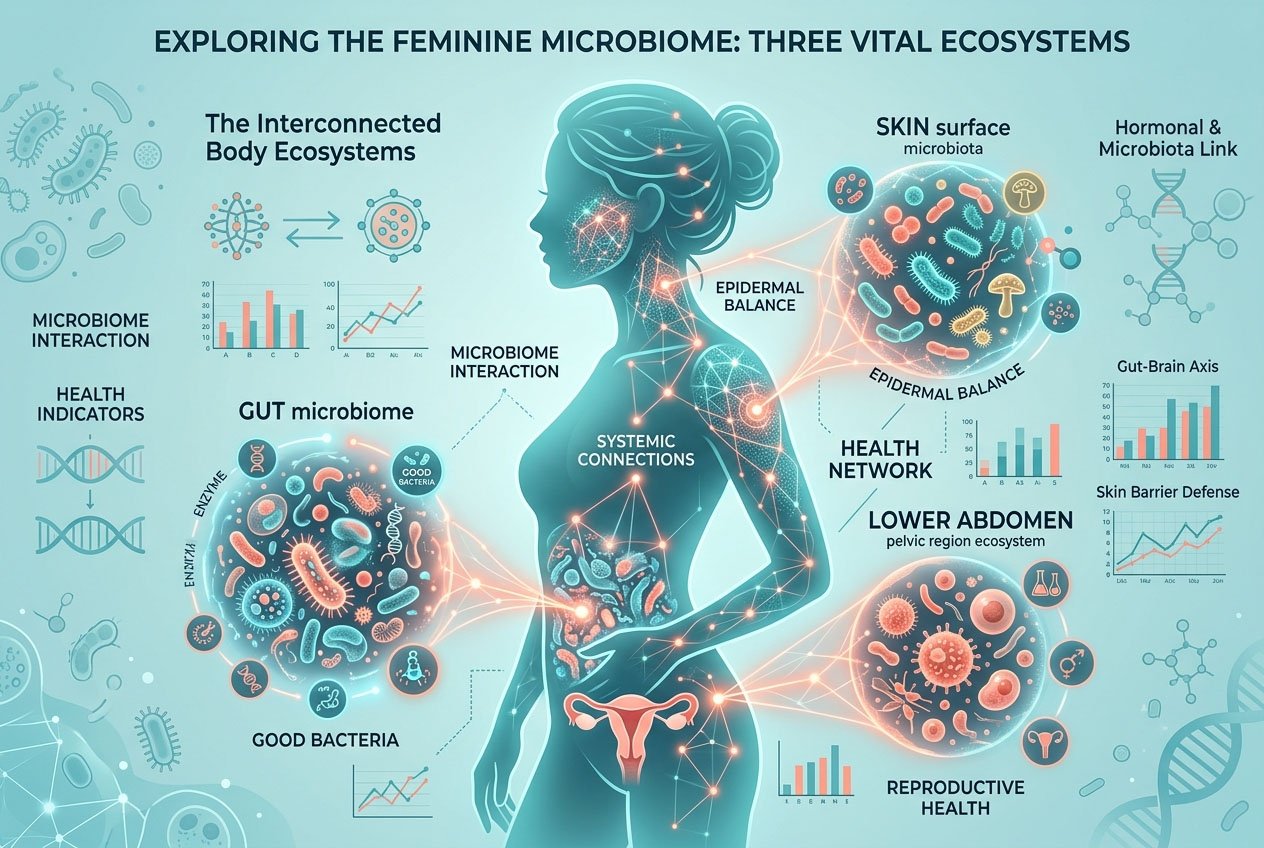
Indeed, in 2026, the microbiome revolution has expanded far beyond the gut. Women’s health, meanwhile, is at the center of it. For the past decade, “microbiome” was almost synonymous with “gut,” though the reality is bigger. Still, yogurt ads, probiotic drinks, and wellness podcasts all pointed to the same conclusion. The message: healthy gut bacteria, healthy you.
Researchers now study the microbiome of the skin, the mouth, the urinary tract, and the vagina. Nevertheless, each is a distinct ecosystem with its own role. Understanding how they interact, then, is reshaping everything from skincare to reproductive medicine.
The Microbiome Revolution: Beyond the Gut
The gut microbiome remains the best-studied ecosystem, with research linking it to digestion, immunity, mood, and even hormone metabolism. Gut bacteria, for example, partially metabolize estrogen in a pathway researchers call the estrobolome. A well-functioning gut helps process and clear excess hormones. That’s why gut health and skin health intertwine so tightly.
But the gut isn’t the only microbiome that matters. The skin has its own bacterial community that influences everything from acne to eczema. The oral microbiome affects gum health and cardiovascular risk. And researchers now recognize the urinary and vaginal microbiomes as critical to women’s reproductive health.
This expansion matters because it means we no longer manage health one organ at a time. Your body is a system of ecosystems, and supporting one often supports the others.
The Microbiome Revolution: The Gut-Skin Axis
If you’ve ever noticed breakouts after a week of poor eating, you’ve experienced the gut-skin axis in action. The gut and skin communicate through inflammation, the immune system, and metabolites produced by gut bacteria. Our guide to gut health and your skin dives into exactly how this connection works.
When gut bacteria stay balanced, inflammation stays low and skin looks calmer. When antibiotics, stress, or a poor diet disrupt the gut, the imbalance can show up on your face. This is why so many dermatologists now ask about diet and digestion. It’s also why adult acne after 35 often responds to gut-focused changes.
The skin microbiome itself is also under scrutiny. Harsh cleansers and over-exfoliation strip the skin’s natural bacterial community, which can trigger sensitivity and breakouts. Gentle, microbiome-friendly skincare is now a mainstream category — a direct result of this research.
The Vaginal Microbiome: A New Center of Attention
Research on the microbiome has expanded far beyond the gut. The vaginal microbiome has become a central focus in women’s health. A healthy vaginal microbiome — where Lactobacillus species dominate — has become a key shield against infections. It’s also a cornerstone of overall reproductive and even systemic health.
Consumer awareness is skyrocketing alongside the research. In major markets, women’s reproductive health product sales have nearly doubled over five years. The vast majority of women report high concern about their reproductive health. Demand has shifted from basic cleansing to daily, preventive, precisely formulated care tailored to different life stages.
This shift reflects something bigger. Women are no longer accepting “it’s just how it is” as an answer about their bodies. The microbiome revolution has given women a vocabulary and a science to ask better questions.
The Gut-Vaginal-Urinary Connection
The ecosystems of your body don’t operate in isolation — they interact constantly. The gut and vaginal microbiomes share immune system connections, and a disrupted gut can influence the balance of bacteria elsewhere. The urinary tract sits adjacent to the vaginal ecosystem. That’s why recurrent urinary tract infections frequently follow changes in the vaginal microbiome.
This interconnectedness explains why an integrative approach works best. Doctors might tell a woman with recurrent infections to take antibiotics repeatedly. The actual driver may be an underlying gut or vaginal imbalance. Looking at the whole system is where the microbiome revolution changes care. Each episode is not an isolated event.
The research is also uncovering why the same probiotic strains work for some women and not others. Microbiome composition is deeply individual, shaped by genetics, history of antibiotic use, diet, and hormonal status. This is precisely why “one strain fits all” probiotic advice is giving way to more personalized approaches. It’s also why working with a provider who understands your history is worth it.
How to Support Your Microbiomes Together
- Eat prebiotic fiber — it feeds beneficial bacteria in the gut. Our digestion guide covers the best sources.
- Include fermented foods — yogurt, kefir, kimchi — for a diversity of beneficial strains.
- Choose microbiome-friendly skincare — gentle, pH-balanced products that don’t strip your skin’s ecosystem.
- Avoid unnecessary antibiotics — take them only when your doctor confirms you need them.
- Manage stress and sleep — both directly influence your microbial balance.
The microbiome revolution’s message is simple. Your body is an ecosystem, and every part of it benefits when you support the whole. This understanding is transforming women’s health in particular. It reaches from the gut to the skin, and to the microbiome that protects reproductive health. The more we learn, the clearer it becomes: the old organ-by-organ approach was only ever a fraction of the picture.
Written by Nina Patel for March-8.